


FLASH NEWS:
NEWS

MANIKANDAM, Trichy, July 18:
DB4M Unveils The Invisible Workforce at National Migrant Meet
News reported by: Fr Ratna Neelam SDB
Don Bosco for Migrants (DB4M), in collaboration with the Salesian Province of Trichy, concluded a two-day National Capacity Building Programme on July 17-18, bringing together representatives of Salesian provinces, partner organisations, migrant help desks and labour-rights practitioners from across India.
Held under the theme "Strengthening Protection, Rights and Empowerment of Internal Migrant Workers through Research, Legal Awareness, Organisation and Advocacy," the programme reaffirmed the Catholic Church's commitment to welcoming, protecting, promoting and integrating migrants. It also aimed to build a stronger national network for migrant ministry.
The inaugural session was attended by the Vice Provincial and Economer of the Salesian Province of Trichy along with the Vicar General of the Diocese of Trichy. Addressing the gathering, the Vice Provincial drew inspiration from Barcelona's Sagrada Família Basilica, observing that great achievements are built by countless unseen workers, much like India's migrant workforce. He urged participants to make migrant workers visible by recognising them as co-builders of society.
A major highlight of the programme was the release of The Invisible Workforce, a research publication by Fr Francis Bosco documenting the realities, vulnerabilities and discrimination experienced by migrant workers in brick kilns, textiles and waste management. The study is expected to be an important resource for advocacy, policy engagement and rights-based interventions.
The programme also witnessed the launch of the National Migrant MIS Dashboard, a digital platform designed to standardise case management, documentation, reporting, referrals and evidence generation among Migrant Help Desks across the country. This will strengthen collaboration across the DB4M network.
Technical sessions on the opening day examined India's changing labour landscape, labour codes, protections available to interstate migrant workers, government welfare schemes, portability of social entitlements and the role of trade unions in safeguarding workers' rights.
The second day focused on translating learning into action through discussions on the challenges faced by brick kiln and garment workers, migrant helpline operations, case management, source-destination coordination and province-wise action planning. Participants formulated practical strategies to strengthen Migrant Help Desks and improve coordinated interventions nationwide.
Speaking during the programme, the Economer emphasised that migrants should be recognised as a solution rather than viewed as a problem, acknowledging their indispensable contribution to society and the economy. The Vicar General commended the Salesians' commitment to migrant ministry and highlighted the Diocese of Trichy's efforts to welcome migrant communities through liturgies in their native languages so they experience the Church as their home.
Fr Ratna, National Director of DB4M, called for a shift from isolated initiatives to a unified national network with standardised services, common documentation, uniform reporting formats and a shared MIS platform. He noted that consistent data collection and reporting would enhance accountability, collaboration, advocacy and service delivery across all provinces.
DB4M expressed gratitude to the Salesian Province of Trichy, particularly the Provincial, Vice Provincial and Economer, for their support. Appreciation was also extended to Fr Felix, Fr Jude and Fr Sebastian for coordinating the programme, and to the Rector, Administrator, confreres and the Manikandam community for their hospitality. Resource persons, participants and partner organisations were also acknowledged.
The orientation concluded with a renewed commitment to build a unified national migrant support ecosystem rooted in the Gospel and Catholic Social Teaching. Backed by The Invisible Workforce, the National MIS Dashboard and province-wise action plans, participants pledged to ensure that every migrant worker is welcomed, protected, accompanied and empowered with dignity.


1627
1627

News Published by
SPCSA SPECIAL CIRCULAR
SOUTH ASIA REGION.
BM/2026/SA CIRCULAR 02
As part of the Colle project, we offer an international volunteering experience with young people from all over the world, who live in community and share their lives, …
DOWNLOAD PDF for more information.
Common Spiritual Direction Series
✥ CSDS ✤ Download Your Kit Free
Join the Conversation
Your experience matters. Whether you’re a youth leader, educator, or simply passionate about making a difference—your insights add value that reporting alone can't capture. When you comment, you're not just reacting—you're helping shape a thoughtful, encouraging community.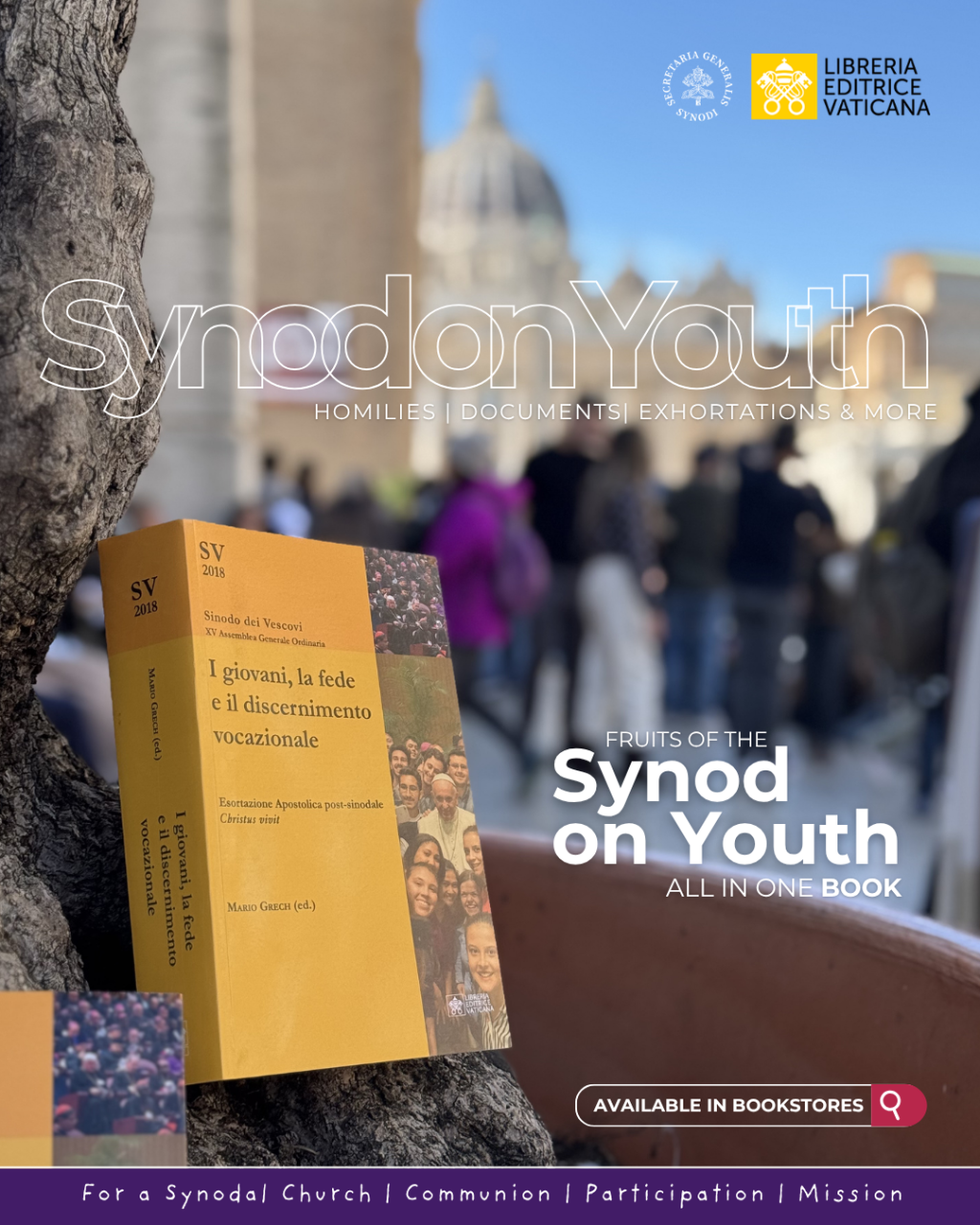 Publisher: Libreria Editrice Vaticana
Year of publication: 2026
Available from: 4 March 2026
Pages: 928 pp., Paperback
Publisher: Libreria Editrice Vaticana
Year of publication: 2026
Available from: 4 March 2026
Pages: 928 pp., Paperback


